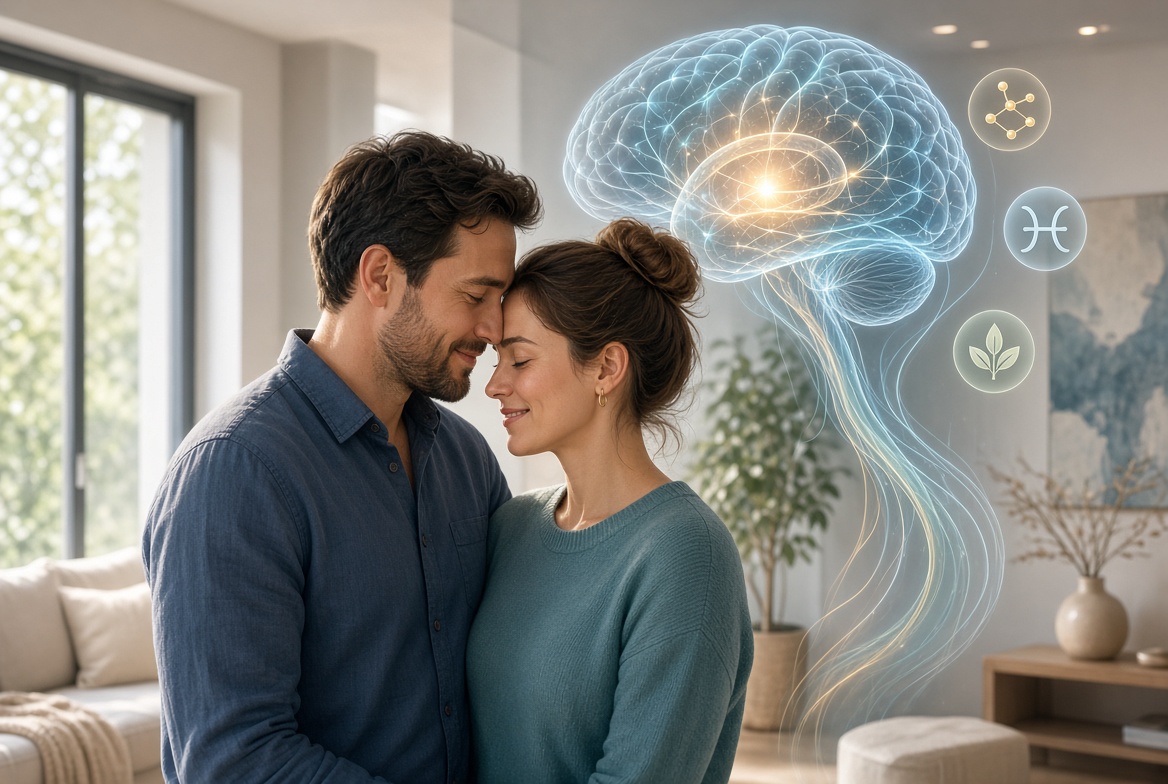
Sexual activity involves much more than the reproductive organs. Desire, arousal, pleasure, orgasm and emotional connection are shaped by communication between the brain, nervous system, hormones and cardiovascular system.
During a wanted sexual experience, the brain processes touch, anticipation, memories, emotions and signals from the body. Chemical messengers involved in motivation, reward, bonding and relaxation may also change. These responses help explain why someone might feel excited, emotionally close, calm or sleepy afterwards.
The effects are not identical for everyone. A positive experience may support relaxation and connection, while an unwanted, painful or emotionally complicated encounter may cause anxiety, sadness or distress. Relationship context, consent, physical health, medication and personal expectations all influence how the brain responds.
The Brain Begins Responding Before Physical Contact
Sexual response can begin with a thought, conversation, memory, image or feeling of emotional closeness. The brain evaluates whether a situation appears interesting, safe and rewarding before noticeable physical arousal develops.
Several brain systems contribute to this process:
- Reward networks help create motivation and anticipation.
- Sensory regions process touch and other physical signals.
- Emotional systems attach meaning to the experience.
- The hypothalamus helps coordinate hormonal and autonomic responses.
- The autonomic nervous system influences blood flow, heart rate and genital response.
- Attention and self-monitoring can either support or interrupt arousal.
This is one reason desire cannot always be produced on command. Stress, fear, distraction, relationship conflict, pain or concern about performance may keep the brain focused on threat or self-evaluation instead of pleasure.
Likewise, a physical response does not prove that someone wanted or enjoyed an activity. Genital arousal and even orgasm can sometimes occur involuntarily. Consent must be established through freely given communication—not inferred from the body’s reaction.
Dopamine and Sexual Motivation
Dopamine is frequently described as a “pleasure chemical,” but that description is incomplete. It is strongly involved in motivation, anticipation, learning and the pursuit of potentially rewarding experiences.
As interest and arousal build, dopamine-related pathways may help direct attention towards sexual cues and reinforce the desire to continue. Orgasm and sexual reward involve interactions between dopamine, oxytocin and the body’s natural opioid systems, although human sexual response cannot be reduced to one chemical. A recent scientific review discusses these overlapping reward mechanisms in greater detail. Read the review on PubMed.
Dopamine also helps the brain learn associations. A particular person, environment, smell or form of touch may become connected with anticipation and pleasure through repeated experience.
This learning process is not automatically positive. If sexual activity repeatedly occurs alongside pressure, fear or pain, the brain may instead begin associating intimacy with anxiety. Safe communication and respect for boundaries therefore matter biologically as well as emotionally.
Oxytocin, Affection and Connection
Oxytocin is released in several social and physical contexts, including affectionate touch, childbirth, breastfeeding and sexual activity. It interacts with dopamine and other signalling systems involved in attachment and social recognition.
This has led to its popular nickname, the “bonding hormone.” However, oxytocin does not automatically create love, trust or permanent attachment. Human relationships are shaped by history, personality, expectations, culture and behaviour—not hormone levels alone.
In a caring and mutually desired encounter, affectionate contact may contribute to feelings of closeness. After an emotionally unsafe experience, however, someone may feel detached, confused or upset despite any hormonal changes.
The brain does not use oxytocin as a guarantee that a relationship is healthy.
Endorphins and Natural Pain Regulation
Pleasurable touch and orgasm may activate endogenous opioid systems—the body’s internal pain- and reward-regulating mechanisms. These processes can contribute to relaxation, wellbeing and temporarily altered pain perception.
Some people report that orgasm briefly eases menstrual discomfort, muscular tension or certain headaches. This response is not universal, and sexual activity should not be presented as a dependable treatment for pain.
In some individuals, sexual activity can trigger headaches, worsen pelvic pain or make an underlying condition more noticeable. Sudden, severe headache during sexual activity—particularly one that reaches maximum intensity rapidly—requires urgent medical assessment.
Persistent pain during or after intimacy should also be discussed with a healthcare professional rather than endured as a normal part of the experience.
Can Sexual Activity Improve Mood?
A positive sexual experience may temporarily improve mood through a combination of:
- Physical pleasure
- Affectionate contact
- Reduced tension
- Emotional reassurance
- Reward-related brain activity
- A feeling of being wanted or connected
- Relaxation following orgasm
However, this does not mean sexual activity is an antidepressant or a substitute for mental-health treatment.
Depression is influenced by biological, psychological and social factors. Someone experiencing persistent sadness, hopelessness, loss of interest or thoughts of self-harm needs appropriate professional support. Sexual activity should never be prescribed informally as the solution.
The original version of this article referred to an observational study associating condomless intercourse with fewer depressive symptoms. That research did not establish that semen treats depression. Relationship circumstances and other differences between the groups could have influenced the results.
Most importantly, this finding is not a reason to stop using condoms. Condoms help reduce the risk of sexually transmitted infections and unintended pregnancy. ActivHomme’s guide to safer sex explains how to make protection part of a comfortable, respectful experience.
Why Some People Feel Sad Afterwards
Not every person feels happy or connected after consensual sexual activity. Some experience sadness, irritability, anxiety, emptiness or a desire to withdraw. This is sometimes called postcoital dysphoria.
Such feelings can occur even when the experience was wanted and physically pleasurable. Possible influences include:
- Emotional vulnerability
- Relationship uncertainty
- Shame learned from cultural or personal messages
- Unmet expectations
- Previous difficult experiences
- Stress or fatigue
- Hormonal changes
- A sudden shift from intense stimulation to quiet
- Conflict that existed before the encounter
An occasional emotional change does not necessarily indicate a disorder or an unhealthy relationship. A partner can respond supportively by avoiding ridicule, allowing space and asking what kind of reassurance would feel helpful.
If sadness occurs frequently, causes significant distress or is connected to trauma, anxiety or depression, speaking with a qualified mental-health professional may help.
Does Sex Reduce Stress?
Wanted sexual activity may produce a short-term sense of calm. Attention shifts towards bodily sensations, muscle tension may be released, and orgasm may be followed by a period of relaxation.
Affection and supportive connection can also help some people feel emotionally secure. However, much of the research in this area is observational and cannot prove that sexual activity itself caused better stress levels.
It may also work in the opposite direction: people who are already less stressed or in satisfying relationships may be more likely to engage in and enjoy intimacy.
Sexual activity can increase stress when it involves:
- Pressure to perform
- Fear of pregnancy or infection
- Unresolved relationship conflict
- Pain
- Body-image concerns
- Difficulty communicating
- A lack of privacy
- Uncertainty about consent
No one should feel obligated to participate for the supposed health benefits. Exercise, sleep, social support, breathing exercises and professional treatment are also evidence-based ways of managing stress.
Why Orgasm May Make Someone Feel Sleepy
Many people report feeling relaxed or sleepy after orgasm. Possible contributors include physical exertion, reduced alertness after arousal and changes in chemical messengers associated with relaxation and satisfaction.
A 2023 diary study found that partnered sexual activity involving orgasm was associated with shorter perceived sleep latency and better perceived sleep quality. Sexual activity without orgasm was not associated with the same outcomes. Because this was an observational study, it identifies an association rather than proving that orgasm will improve sleep for everyone. Read the sleep study on PubMed.
A small 2025 pilot study also reported improved objective sleep measures following both solo and partnered sexual activity, but its limited size means that larger studies are still needed. View the pilot study.
Sleep and sexual wellbeing can influence each other in both directions. Inadequate sleep may reduce desire, energy and emotional patience, while a comfortable intimate experience may make relaxation easier.
Sexual activity is not a treatment for chronic insomnia. Persistent sleep difficulties should be addressed through consistent sleep habits and, when necessary, medical assessment.
Does Sexual Activity Improve Memory?
The original article referred to animal studies in which repeated sexual activity was associated with the formation of new neurons in the hippocampus, a region involved in learning and memory.
These studies may help researchers explore biological mechanisms, but findings in rodents cannot be presented as proof that sex improves human memory. Human sexuality involves psychological, social and relationship factors that laboratory animal experiments cannot reproduce.
There is currently insufficient evidence to recommend sexual activity as a method of preventing memory decline or improving cognitive performance.
For brain health, the stronger evidence supports regular exercise, adequate sleep, management of cardiovascular risks, social engagement and mentally stimulating activity.
The Brain Can Also Create Performance Pressure
Because the brain continuously evaluates what is happening, excessive self-monitoring can interfere with pleasure.
A person may begin thinking:
- “Am I taking too long?”
- “Does my body look attractive?”
- “Will my partner be disappointed?”
- “Am I responding correctly?”
- “Do I need to reach orgasm?”
This internal monitoring shifts attention away from sensation and towards evaluation. Anxiety can then make arousal or orgasm more difficult, creating even more pressure.
Partners can reduce this cycle by treating orgasm as a possibility rather than an obligation. Intimacy does not fail because someone does not reach a particular outcome.
ActivHomme’s guide to the sexual response cycle explains why desire, arousal and orgasm do not always happen predictably or in a fixed order.
Medication and Brain Chemistry
Some medications influence the same neurotransmitter systems involved in sexual response. Selective serotonin reuptake inhibitors and certain other antidepressants may affect desire, arousal or orgasm.
Other possible contributors include:
- Blood-pressure medication
- Hormonal treatment
- Sedating medication
- Some antipsychotic drugs
- Certain prostate treatments
- Alcohol and recreational drugs
A medication’s sexual side effects should be discussed with the prescribing professional. Do not stop or change a prescribed treatment independently. A clinician may be able to adjust the dose, timing or medication while continuing to treat the underlying condition safely.
Healthy Sexual Experiences Require More Than Chemistry
A discussion of dopamine and oxytocin can make intimacy sound like a purely mechanical process. In reality, brain chemistry is only one part of sexual wellbeing.
The World Health Organization describes sexual health as involving physical, emotional, mental and social wellbeing, together with safety, respect and freedom from coercion.
A brain-supportive sexual experience therefore begins with:
- Freely given and ongoing consent
- Respect for changing boundaries
- Honest communication
- Protection from pregnancy and STIs where relevant
- Emotional and physical safety
- Freedom from pressure
- Attention to discomfort or pain
- Acceptance that responses vary
A person may experience some short-term physiological effects during an unhealthy encounter, but that does not make the experience beneficial.
When to Speak With a Professional
Consider consulting a qualified healthcare professional if you experience:
- A sudden or severe headache during sexual activity
- Persistent pain during or after intimacy
- A sudden change in desire, arousal or orgasm
- Sexual difficulties after beginning a medication
- Repeated sadness or anxiety after sexual activity
- Flashbacks, fear or distress associated with intimacy
- Loss of control over sexual behaviour
- Difficulty that causes significant personal or relationship distress
- Ongoing sleep or mood symptoms
A suitable professional may include a primary-care doctor, gynaecologist, urologist, mental-health clinician or qualified sex therapist, depending on the concern.
The Bottom Line
Sexual activity engages brain systems involved in motivation, reward, touch, emotion and social connection. Dopamine contributes to anticipation and learning, while oxytocin and endogenous opioid systems may participate in closeness, pleasure and relaxation.
Some people experience an improved mood, less tension or greater sleepiness following a wanted and pleasurable encounter. These effects vary, and the research does not support treating sexual activity as a cure for depression, insomnia, pain or memory problems.
Context is as important as chemistry. Consent, trust, communication, health and personal expectations help determine whether an experience feels calming, connecting, neutral or distressing.
For related information, read ActivHomme’s guides to the health benefits of sex, understanding orgasms and safer sexual choices.
Frequently Asked Questions
What happens in the brain during sexual activity?
Brain systems involved in reward, attention, sensation, emotion and autonomic control become active. Chemical messengers such as dopamine, oxytocin and endogenous opioids may contribute to motivation, pleasure and relaxation.
Does sex release dopamine?
Sexual anticipation and reward involve dopamine signalling. Dopamine is associated with motivation and learning, not simply pleasure.
Why do people feel sleepy after orgasm?
Relaxation following arousal, physical exertion and changes in neural and hormonal activity may contribute. Studies suggest an association between orgasm and better perceived sleep, but the effect is not universal.
Can sex improve mental health?
A wanted and positive experience may temporarily support mood or connection. It is not a treatment for depression, anxiety or another mental-health condition.
Why might someone feel sad after sex?
Postcoital sadness may be related to vulnerability, stress, shame, relationship concerns, past experiences or other emotional factors. Persistent distress deserves professional support.
Does sex improve memory?
Animal experiments have suggested possible changes in the hippocampus, but there is insufficient human evidence to claim that sexual activity improves memory.
Do condoms interfere with the psychological benefits?
There is no good evidence that avoiding condoms produces an antidepressant effect. Protection decisions should be based on pregnancy and STI risk, testing, exclusivity and the preferences of everyone involved.