Introduction
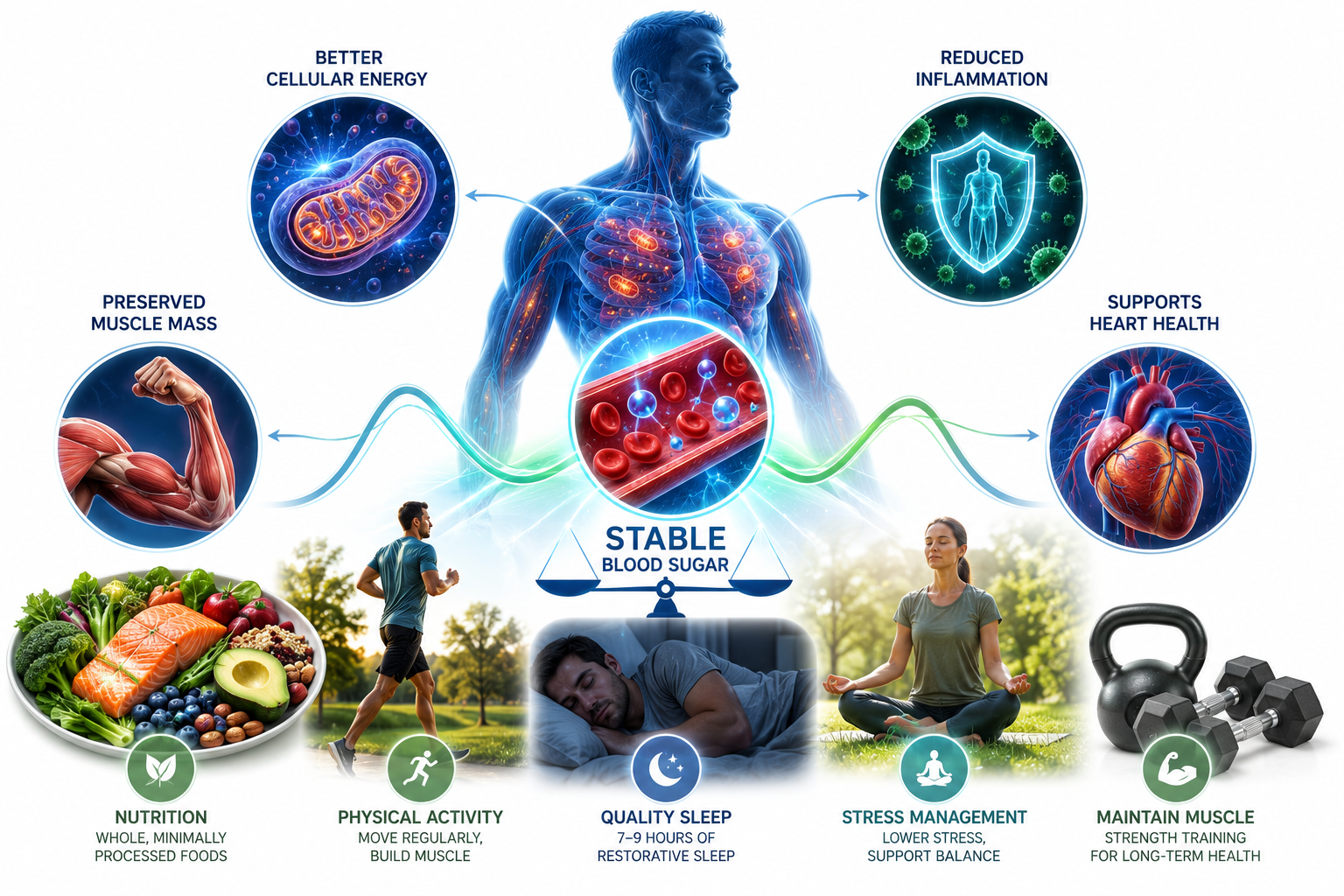
When most people hear the term blood sugar, they immediately think of diabetes. While blood glucose management is essential for people living with diabetes, maintaining stable blood sugar is increasingly recognised as a cornerstone of long-term health—even for those with normal glucose levels.
Every cell in your body depends on glucose for energy. Your brain uses it to think, your muscles rely on it to move, and your organs require a steady supply to perform countless biological functions every second. The goal isn’t to eliminate glucose or avoid carbohydrates altogether; it’s to help your body regulate blood sugar efficiently so cells receive a consistent supply of energy without placing unnecessary stress on your metabolism.
Emerging research in longevity science suggests that glucose variability—the degree to which blood sugar rises and falls throughout the day—may influence several biological processes associated with aging. Frequent, exaggerated blood sugar spikes can increase oxidative stress, promote chronic low-grade inflammation, and challenge the efficiency of mitochondria, the tiny structures inside cells responsible for producing energy. Over many years, these effects may contribute to metabolic dysfunction and increase the risk of chronic disease.
In contrast, relatively stable blood sugar supports healthier cellular function. It helps the body produce energy more efficiently, reduces unnecessary metabolic stress, and promotes healthier communication between hormones, organs, and tissues. This doesn’t mean your glucose should remain perfectly flat throughout the day—small rises after eating are completely normal. Instead, the aim is to avoid repeated, dramatic fluctuations caused by poor dietary habits, inactivity, chronic stress, or insufficient sleep.
The encouraging news is that blood sugar stability is largely influenced by everyday lifestyle choices. The foods you eat, how active you are, the quality of your sleep, and even your stress levels all affect how your body manages glucose. Small, consistent improvements in these areas can have meaningful benefits for metabolic health over time.
In this article, we’ll explore why stable blood sugar matters far beyond diabetes prevention, how it supports healthy aging, and the science-backed strategies that can help you maintain better glucose balance throughout life.
What Does Stable Blood Sugar Actually Mean?
Stable blood sugar doesn’t mean maintaining exactly the same glucose level all day. That would neither be realistic nor healthy.
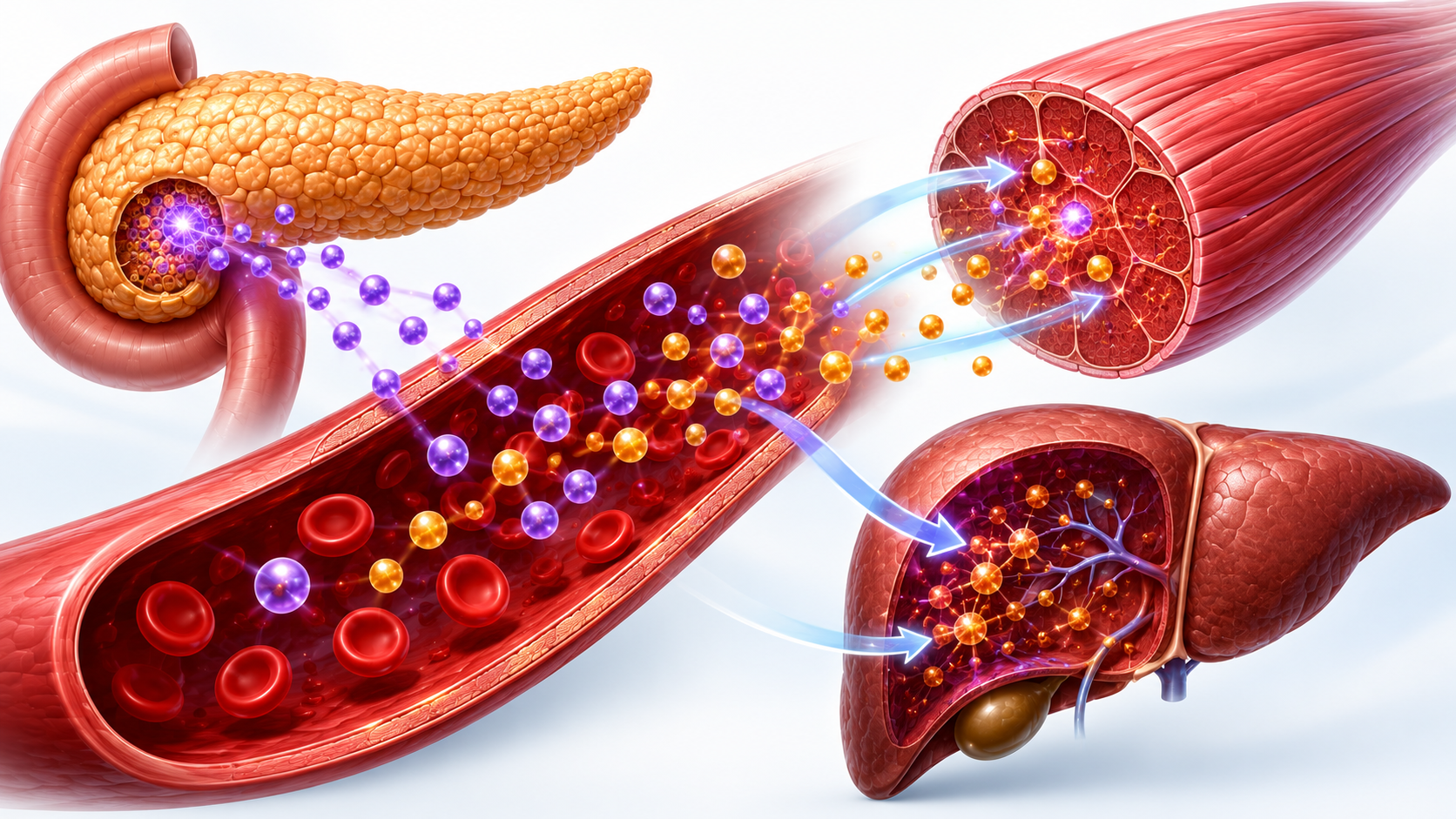
Your blood glucose naturally changes throughout the day in response to eating, physical activity, hormones, and even your sleep-wake cycle. After a meal, carbohydrates are broken down into glucose, which enters the bloodstream. In response, the pancreas releases insulin, allowing glucose to move into cells where it is either used for energy or stored for later use.
In a metabolically healthy person, this process is highly efficient. Blood sugar rises gradually after eating, reaches a moderate peak, and then returns toward baseline within a few hours. These temporary increases are a normal part of human physiology and provide your body with the fuel it needs to function.
Problems arise when blood sugar repeatedly rises too high, stays elevated for prolonged periods, or drops rapidly afterward. These larger fluctuations—often referred to as glucose variability—can place greater demands on insulin production and may increase oxidative stress within cells.
Think of your bloodstream like a road network.
When traffic flows smoothly, vehicles reach their destination efficiently and with minimal disruption. Occasional increases in traffic are expected, but the system continues to function because congestion is temporary.
However, if traffic repeatedly builds into severe congestion before suddenly clearing, the entire transport system becomes less efficient. Over time, this constant stop-and-go pattern places additional strain on roads, vehicles, and infrastructure.
Blood sugar behaves in much the same way. Gentle rises and falls are part of normal metabolism, whereas frequent, exaggerated spikes and crashes create a less favourable environment for your cells.
Importantly, stable blood sugar isn’t determined by a single glucose reading. Two people may have the same fasting blood glucose or HbA1c, yet experience very different glucose patterns throughout the day. One person may maintain relatively consistent levels after meals, while another experiences repeated sharp peaks followed by rapid declines. Increasingly, researchers believe these patterns may provide valuable insight into overall metabolic health.
This is one reason continuous glucose monitors (CGMs) have attracted interest beyond diabetes care. By measuring glucose every few minutes, CGMs reveal how different foods, exercise, sleep, and stress influence individual glucose responses. While these devices are not necessary for everyone, they have highlighted an important concept: how your blood sugar changes may be just as important as the average level itself.
Why Blood Sugar Stability Matters More Than Average Blood Sugar
For many years, healthcare professionals have relied on fasting blood glucose and HbA1c to assess long-term glucose control. These measurements remain valuable and are widely used to diagnose and monitor diabetes and prediabetes.
However, they provide only part of the picture.
A fasting glucose test captures your blood sugar at a single point in time, usually after an overnight fast. HbA1c estimates your average blood glucose over approximately the previous two to three months by measuring the amount of glucose attached to haemoglobin inside red blood cells.
While these tests reveal overall glucose exposure, they cannot show how dramatically blood sugar rises and falls throughout the day.
Imagine two people who both have an HbA1c of 5.4%.
The first person experiences modest glucose increases after meals that quickly return to normal. The second has frequent spikes after eating followed by sharp declines between meals. Although their average glucose may appear similar, their daily metabolic experience is quite different.
Scientists now use the term glucose variability to describe these fluctuations. A growing body of research suggests that greater glucose variability may be associated with increased oxidative stress and vascular dysfunction, although much of the evidence is strongest in people with diabetes. Researchers are continuing to investigate how these patterns influence long-term health in the general population.
For individuals without diabetes, this doesn’t mean every temporary spike is harmful or that normal post-meal rises should be feared. Glucose is meant to increase after eating. The focus should instead be on creating daily habits that support a smoother glucose response over time.
Factors such as choosing minimally processed foods, eating sufficient fibre and protein, staying physically active, sleeping well, and managing stress all contribute to healthier glucose regulation.
Rather than chasing perfect numbers, the goal is to build a metabolism that adapts efficiently to everyday life. Stable blood sugar is not about restriction—it’s about resilience.
FAQ
Is stable blood sugar important if I don’t have diabetes?
Yes. Stable blood sugar supports energy production, metabolic health, cardiovascular function, and healthy aging, even in people without diabetes.
What causes blood sugar spikes?
Large portions of refined carbohydrates, sugary drinks, poor sleep, stress, physical inactivity, and highly processed foods can all contribute to higher post-meal glucose spikes.
Can exercise help stabilize blood sugar?
Yes. Both aerobic exercise and resistance training improve insulin sensitivity and help muscles use glucose more efficiently.
Is fruit bad for blood sugar?
No. Whole fruits contain fibre, vitamins, minerals, and antioxidants that slow glucose absorption and support overall health when eaten as part of a balanced diet.
What is glucose variability?
Glucose variability refers to how much blood sugar fluctuates throughout the day. Excessive swings may place more metabolic stress on the body than relatively stable glucose levels.
Do I need a continuous glucose monitor (CGM)?
Not necessarily. CGMs are invaluable for many people with diabetes and may provide useful insights for some individuals without diabetes, but they are not essential for maintaining healthy blood sugar in the general population.