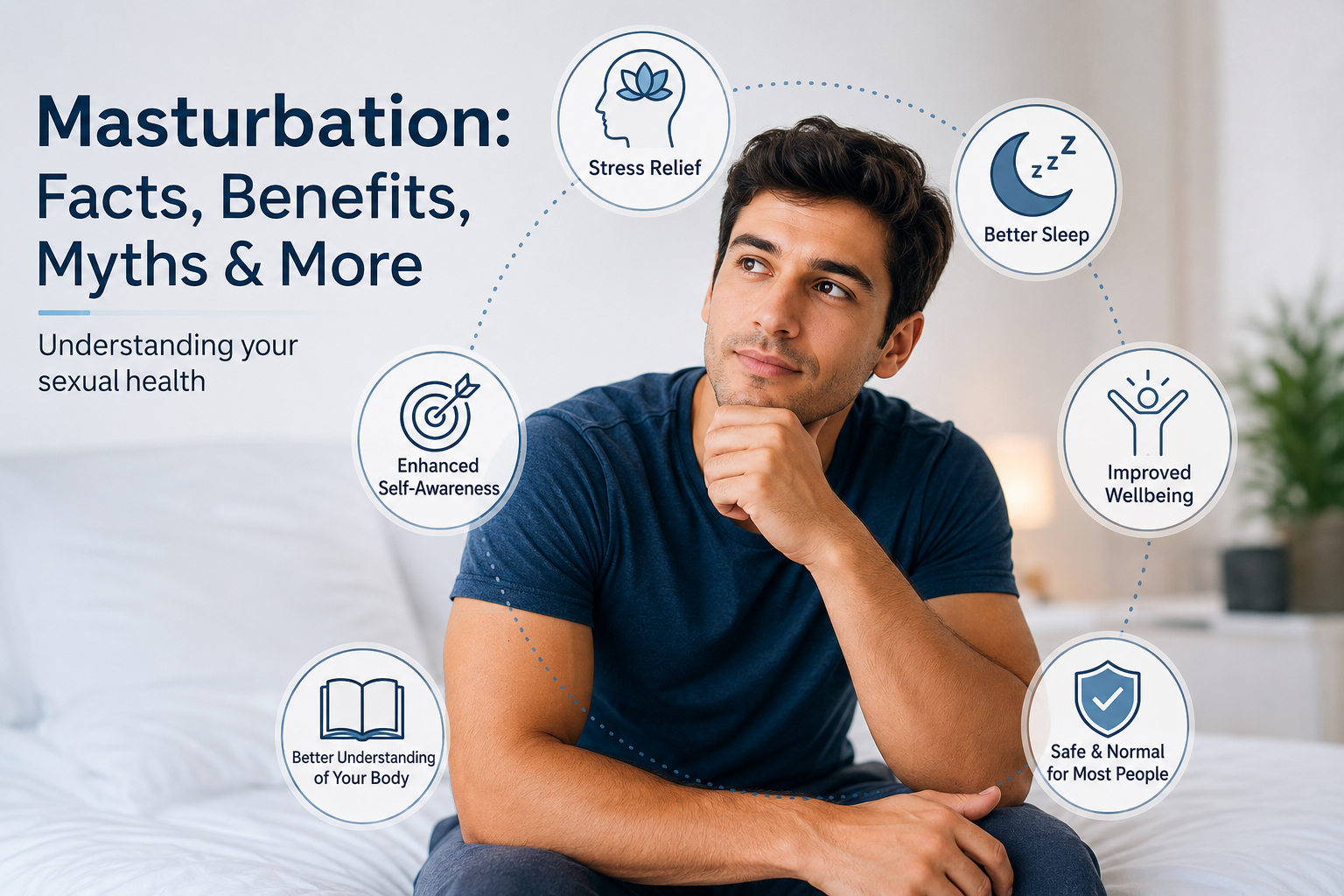
What Is Masturbation?
Masturbation is the stimulation of one’s own genitals for sexual pleasure. It may or may not result in orgasm and is practiced by people of different ages, genders, and backgrounds.
Although the topic is sometimes surrounded by embarrassment or misinformation, healthcare professionals generally recognize masturbation as a normal part of human sexuality for many adults.
Some individuals masturbate regularly, while others rarely or never do. These differences are entirely normal because sexual desire varies according to age, hormones, relationship status, physical health, stress levels, personal beliefs, and lifestyle.
Rather than asking whether masturbation itself is normal, a more useful question is whether it fits comfortably within a person’s overall wellbeing and daily life.
Is Masturbation Healthy?
For most healthy adults, masturbation is not considered physically harmful.
Medical organizations generally agree that masturbation is a normal sexual activity and, for many people, may contribute positively to sexual wellbeing.
However, like many behaviors, balance matters.
When masturbation begins interfering with work, relationships, sleep, or emotional health, it may become a concern worth discussing with a healthcare professional.
Healthy sexual behavior should support—not replace—a balanced lifestyle.
Potential Benefits of Masturbation
Scientific research suggests masturbation may provide several benefits for some individuals. Experiences vary, and not everyone will notice the same effects.
May Help Relieve Stress
During sexual arousal and orgasm, the brain releases chemicals such as dopamine, oxytocin, and endorphins.
These naturally occurring chemicals are associated with:
- Relaxation
- Pleasure
- Temporary stress reduction
- Emotional comfort
Many people report feeling calmer after orgasm, although masturbation should not be considered a treatment for chronic stress or mental health conditions.
May Improve Sleep
Some people notice they fall asleep more easily after masturbation.
This may be related to post-orgasm relaxation and changes in hormone and neurotransmitter activity.
Good sleep, however, still depends primarily on healthy sleep habits, stress management, and overall physical health.
Better Understanding of Your Body
Masturbation allows people to become more familiar with their own sexual responses.
Understanding what feels comfortable may help improve communication with a partner and contribute to healthier intimate relationships.
Knowing your own body can also help you notice changes in sexual function that may deserve medical attention.
May Support Sexual Wellbeing
Sexual wellbeing is more than intercourse.
For some individuals, masturbation provides a healthy way to:
- Explore sexuality
- Relieve sexual tension
- Maintain awareness of libido
- Better understand sexual preferences
Healthy sexuality differs from person to person, and there is no single “correct” way to experience it.
Can Masturbation Become a Problem?
For most people, masturbation is simply one part of a healthy sex life.
However, problems may arise if it becomes excessive or begins affecting other aspects of life.
Possible warning signs include:
- Missing work or school because of masturbation
- Neglecting relationships
- Loss of interest in daily activities
- Physical injury from overly vigorous stimulation
- Feeling unable to control the behavior
- Significant guilt or emotional distress
It’s important to recognize that frequency alone does not determine whether masturbation is problematic.
Someone may masturbate frequently without negative consequences, while another person may experience distress despite masturbating much less often.
The key question is whether the behavior is affecting your health, responsibilities, or quality of life.
If so, speaking with a healthcare professional or mental health provider may be beneficial.
Common Myths About Masturbation
Despite years of scientific research, myths remain common.
Myth: Masturbation Causes Blindness
Fact: There is no scientific evidence that masturbation affects eyesight or causes blindness.
Myth: Masturbation Causes Infertility
Fact: Masturbation does not cause infertility in healthy adults.
Fertility depends on many factors including age, hormone levels, medical conditions, lifestyle, and reproductive health.
Myth: Masturbation Permanently Lowers Testosterone
Fact: Current research does not show that masturbation causes long-term reductions in testosterone.
Hormone levels naturally fluctuate throughout the day regardless of masturbation.
Myth: Masturbation Causes Erectile Dysfunction
Fact: Masturbation itself is not considered a direct cause of erectile dysfunction.
However, if pornography use or compulsive sexual behaviors begin affecting sexual expectations or relationships, it may contribute to difficulties for some individuals.
Persistent erectile dysfunction should always be evaluated by a healthcare professional because it may be related to cardiovascular disease, diabetes, hormone imbalance, stress, or other medical conditions.
Myth: Everyone Masturbates the Same Amount
Fact: There is no medically recommended frequency.
Some people masturbate several times per week, others only occasionally, and some not at all.
Individual differences are completely normal.
Masturbation and Relationships
Being in a relationship does not necessarily mean masturbation stops.
Many people continue masturbating while maintaining healthy, satisfying relationships.
Partners may have different preferences, libidos, or levels of sexual desire.
Open communication, mutual respect, and understanding are often more important than comparing sexual habits.
Rather than viewing masturbation as a threat to intimacy, many couples see it simply as another aspect of individual sexuality.
Does Masturbation Affect Mental Health?
For many people, masturbation is associated with temporary relaxation and stress relief.
However, emotional responses differ.
Some individuals experience:
- Relaxation
- Better mood
- Reduced stress
Others may experience:
- Guilt
- Anxiety
- Shame
These feelings are often influenced by cultural, religious, or personal beliefs rather than masturbation itself.
If masturbation causes persistent emotional distress, discussing these concerns with a qualified healthcare professional or counselor may be helpful.
When Should You See a Doctor?
Although masturbation is generally considered safe, medical advice should be sought if you experience:
- Pain during or after masturbation
- Bleeding
- Injury to the genitals
- Persistent erectile dysfunction
- Significant changes in libido
- Emotional distress related to sexual behavior
- Compulsive sexual behavior affecting work or relationships
Healthcare professionals can help determine whether symptoms are related to an underlying medical condition or whether additional support may be beneficial.
Frequently Asked Questions
Is masturbation healthy?
For most healthy adults, masturbation is considered a normal sexual behavior and is generally not harmful when practiced safely.
Is daily masturbation normal?
There is no medically recommended frequency.
If masturbation does not interfere with daily responsibilities or wellbeing, frequency alone is usually not considered a problem.
Does masturbation reduce testosterone?
Current evidence does not support the idea that masturbation causes long-term reductions in testosterone levels.
Can masturbation cause erectile dysfunction?
Masturbation itself is not considered a direct cause of erectile dysfunction.
Persistent erection problems should be evaluated by a healthcare professional.
Does masturbation affect fertility?
For most healthy adults, masturbation does not reduce fertility.
Is masturbation bad for mental health?
Not necessarily.
For many people it is a normal part of healthy sexuality.
However, if it causes significant distress or becomes compulsive, professional advice may be appropriate.
Can masturbation improve sleep?
Some people find masturbation relaxing before bedtime, although sleep quality depends on many lifestyle and health factors.
Final Thoughts
Masturbation is a normal part of human sexuality for many adults and remains one of the most misunderstood topics in sexual health. While myths and misconceptions continue to circulate, current medical evidence suggests that masturbation is generally safe when practiced in a way that does not interfere with daily life, relationships, or emotional wellbeing.
There is no universal definition of “normal” when it comes to sexual behavior. Every person has different levels of sexual desire, shaped by age, health, hormones, lifestyle, and personal values. Rather than comparing yourself to others, focus on whether your sexual habits support your overall wellbeing and align with your own beliefs and relationships.
If masturbation becomes painful, compulsive, or causes emotional distress, seeking advice from a healthcare professional can help identify any underlying concerns. Looking after your sexual health is an important part of looking after your overall physical and mental health.